 CAD
 USD

 We Ship across CANADA & USA.
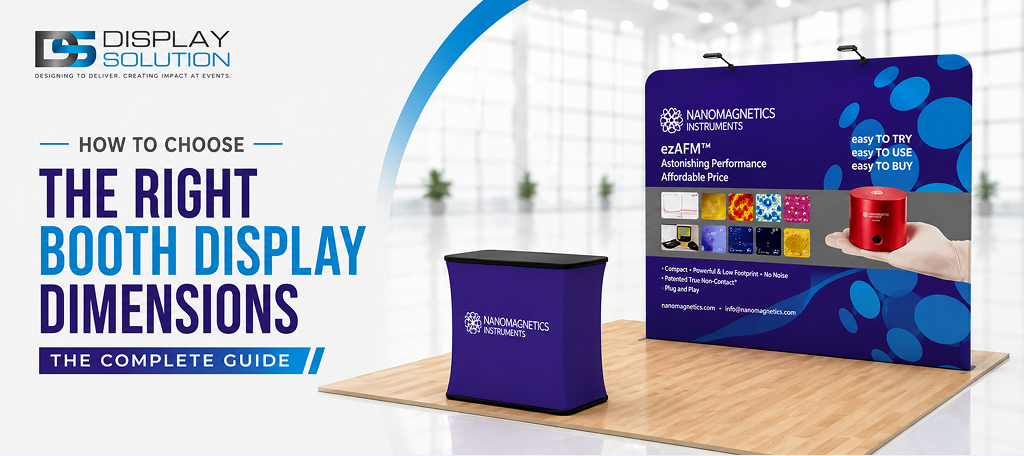
Walk any trade show floor, and you'll notice it immediately where some booths feel like magnets: open, inviting, impossible to walk past- others feel cramped, cluttered, or strangely invisible despite expensive graphics. The difference often has nothing to do with budget. It comes down to one decision made weeks before the event: choosing the right booth dimensions.
Pick a space that's too small, and you'll be turning away foot traffic, stressing your staff, and hiding your best products. Go too big without a plan, and you'll waste thousands on empty square footage that echoes awkwardly on a busy show floor.
This guide walks you through everything you need to know to choose trade show booth dimensions that match your goals, your budget, and the specific event you're attending.
Why Booth Dimensions Matter More Than You Think
Most exhibitors spend enormous energy on graphics, giveaways, and staffing. Booth size is often treated as an afterthought, a box to check after the "fun" decisions are made.
That's a mistake.
Your booth's footprint determines:
- How many visitors can comfortably enter at once - a busy booth with nowhere to stand sends people walking past
- What display structures and furniture can you use - towers, hanging signs, and backlit counters all have space requirements
- Your visual weight on the show floor - larger booths naturally attract more attention from aisles
- Your total event cost - floor space fees, drayage, and logistics all scale with square footage
- How your staff performs - a well-sized booth reduces stress and improves conversations
The right dimensions create the right environment. And the right environment drives results.
The Standard Trade Show Booth Sizes (And When to Use Each)
10x10 Booth (100 sq ft)
The 10x10 is the most common booth size at trade shows and the starting point for most first-time exhibitors. It's compact, affordable, and surprisingly versatile when designed thoughtfully.
Best for:
- Small businesses and startups entering the trade show circuit
- Companies testing a new show or market
- Events where foot traffic does the heavy lifting (consumer expos, niche industry shows)
- Exhibitors with a focused product line or single message
What fits:
- A tension fabric pop-up display or straight/curved backdrop
- One to two display counters or kiosks
- Lighting and basic literature holders
- 1-2 staff members comfortably
The honest limitation: A 10x10 booth puts you side-by-side with dozens of competitors. Your graphics and messaging carry nearly all the weight. Invest heavily in your trade show display graphics. They're doing the selling before anyone steps in.
10x20 Booth (200 sq ft)
Doubling your footprint to a 10x20 is often the smartest upgrade an established exhibitor can make. You get significantly more visual presence without the complexity of a custom island build.
Best for:
- Brands with a growing product line that need demonstration space
- Companies attending mid-size industry shows where competition is high
- Exhibitors who want to integrate seating or a meeting area
- Teams of 3–5 staff
What fits:
- A full backwall display system with layered depth
- Product demo stations
- A reception counter and seating area
- Literature racks and monitor mounts
- Overhead banner or signage structures
The 10x20 is where booth design starts feeling intentional. You have enough room to create zones, a welcoming front, a demo middle, and a conversation/close area at the back.
20x20 Booth (400 sq ft)
Step into a 20x20 and you've crossed into island booth territory. Open on all four sides (or three, in a corner configuration), this size demands a fully custom design strategy and rewards it with dramatically higher engagement.
Best for:
- Established brands prioritizing presence and authority at key shows
- Companies with complex products requiring hands-on demonstration
- Businesses running multiple simultaneous conversations with prospects
- Major industry events (trade shows with 500+ exhibitors)
What fits:
- Custom modular displays with overhead structures and hanging signs
- Multiple demo stations
- Private meeting rooms or enclosed consultation areas
- Lounge seating, coffee bars, or interactive experiences
- 5–10+ staff members
At 20x20, your booth becomes a destination. Visitors don't just stop. they stay, explore, and engage. This is where brand experiences are built.
20x30, 20x40, and Larger Island Booths
These large island configurations are the domain of industry leaders, major launches, and brands that need to dominate a show floor. If you're in this category, you likely already know it but even large exhibitors benefit from asking whether all that square footage is being activated effectively.
One underused strategy: use larger footprints to create separate areas for different buyer personas or product categories, rather than simply filling space with more signage.
Key Factors to Consider When Choosing Your Booth Size
1. Your Goals for the Show
Are you generating leads? Launching a product? Closing deals? Building brand awareness? Your objective should drive your size decision.
- Lead generation at a large show → You need space for multiple staff conversations simultaneously → 10x20 minimum
- Product launch with live demo → You need demo space, gathering area, and room for crowds → 20x20+
- Brand awareness at a consumer event → A 10x10 with exceptional backlit display graphics may outperform a larger, generic setup
2. The Show's Typical Booth Mix
Research what your competitors and adjacent brands typically use at this specific show. If 80% of exhibitors are in 20x20 islands and you arrive with a 10x10, you'll feel like a footnote.
Ask the show organizer for the floor plan and exhibitor size breakdown before committing.
3. Traffic Flow and Aisle Exposure
A corner booth (open on two sides) in a 10x10 space can outperform an inline 10x20 that's surrounded on three sides. When reviewing floor plans:
- Corner spaces give you two aisles of exposure
- Island booths give you four
- End-cap booths offer a premium inline alternative
Factor in aisle width, too. Wider main aisles bring more traffic past your booth, making a smaller space more productive.
4. Number of Staff
A rough rule of thumb: plan for 50 square feet per staff member, then add space for any demo equipment, furniture, and visitor flow. If you plan to have 4 staff members and a product demo station, a 10x20 (200 sq ft) is about right.
Overstaffing a small booth creates a closed-off, intimidating vibe. Understaffing a large booth makes it feel abandoned.
5. Your Display Structures
Certain trade show display structures have minimum space requirements:
- Overhead hanging signs typically require 20x20+ (and show approval)
- Double-deck structures need 20x20 minimum and often 20x30+
- Curved or arching backwalls need 10ft depth minimum
- Large format monitors and video walls need backing and adequate viewing distance
Plan your structure first, then confirm your square footage supports it, not the other way around.
6. Budget (Including Hidden Costs)
Booth space fees are just the beginning. As your footprint grows, so do:
- Drayage fees (material handling) - often $1–3+ per pound, billed by square footage in some venues
- Electrical and AV costs - larger booths use more power
- Carpet and flooring - priced per square foot
- Furniture rental - scales with space
- Setup and dismantling labor - bigger builds take more hours
Get a full cost model before upgrading dimensions. Sometimes staying at 10x20 with a premium custom display build beats a bare 20x20.
A Quick-Reference Booth Size Decision Chart
| Booth Size | Best For | Typical Staff | Key Feature |
|---|---|---|---|
| 10x10 | First-timers, focused brands | 1-2 | Affordable, simple |
| 10x20 | Growing brands, demo needs | 2-4 | Zones and depth |
| 20x20 | Island presence, complex products | 4-8 | Four-sided visibility |
| 20x30+ | Industry leaders, major launches | 8+ | Full brand experience |
Common Booth Sizing Mistakes to Avoid
Choosing size based on budget alone. A smaller, well-executed booth beats a larger, poorly designed one every time. But underestimating the space you need for your goals is equally costly.
Ignoring ceiling height regulations. Most shows have 8-ft height limits for inline booths and 16-20ft for island configurations. Verify before ordering any tall structures or hanging elements.
Forgetting about storage. You need somewhere to put bags, extra literature, personal items, and product inventory. Factor in storage space or choose displays with built-in storage counters.
Assuming bigger is always better. A 10x10 booth with a beautifully backlit graphic wall, a smart layout, and two well-trained staff members can outperform a 20x20 with generic banners and no clear flow.
Right-Size Your Booth, Maximize Your ROI
There's no universally "correct" trade show booth dimension. The right size is the one that fits your specific goals, your staff count, your display structures, and the competitive landscape of the shows you attend.
Start by working backward from your objectives. Then map your layout, your display elements, and your staffing plan before committing to square footage. When in doubt, a well-designed 10x20 beats an underprepared 20x20 every single time.
Ready to find the perfect display solution for your next event? Explore our full range of trade show displays and booth configurations and get expert guidance from our team, no matter what size booth you're planning.


